

Lawns That Fill In Properly After Treatment
Aerating and overseeding in Charlotte for thin, compacted turf that resists recovery on its own
Compacted soil is one of the most common reasons Charlotte lawns stall out. When foot traffic and clay-heavy subsoil press the top layer tight, grass roots cannot pull in oxygen or nutrients regardless of how often the lawn is watered or fertilized. Maximum Landscaping & Lawn Care performs aerating and overseeding for homeowners whose turf has developed bare patches, thin coverage, or that dull, struggling color that fertilizer alone doesn't correct. The work targets the mechanical barrier first, then introduces seed into conditions that actually support germination.
Core aeration pulls small plugs of soil from the lawn and deposits them on the surface, where they break down and reintroduce organic matter to the turf layer. Overseeding follows immediately, dropping seed directly into the open channels where it makes contact with loosened soil rather than sitting on top of thatch. Many Charlotte properties built during the 1980s and 1990s expansion have lawns over red clay fill that was graded during construction and never amended, which makes mechanical aeration more productive here than top-dressing alone. The plug holes also reduce runoff across sloped yards by allowing water to move down into the root zone instead of sheeting across the surface.
Arrange a lawn assessment with Maximum Landscaping & Lawn Care to identify whether compaction, thin coverage, or seed variety mismatch is the primary issue on your property..
Gastonia, NC
28052
- Mon - Sat
- -
- Sunday
- Closed
What Changes Once Aeration and Overseeding Are Finished
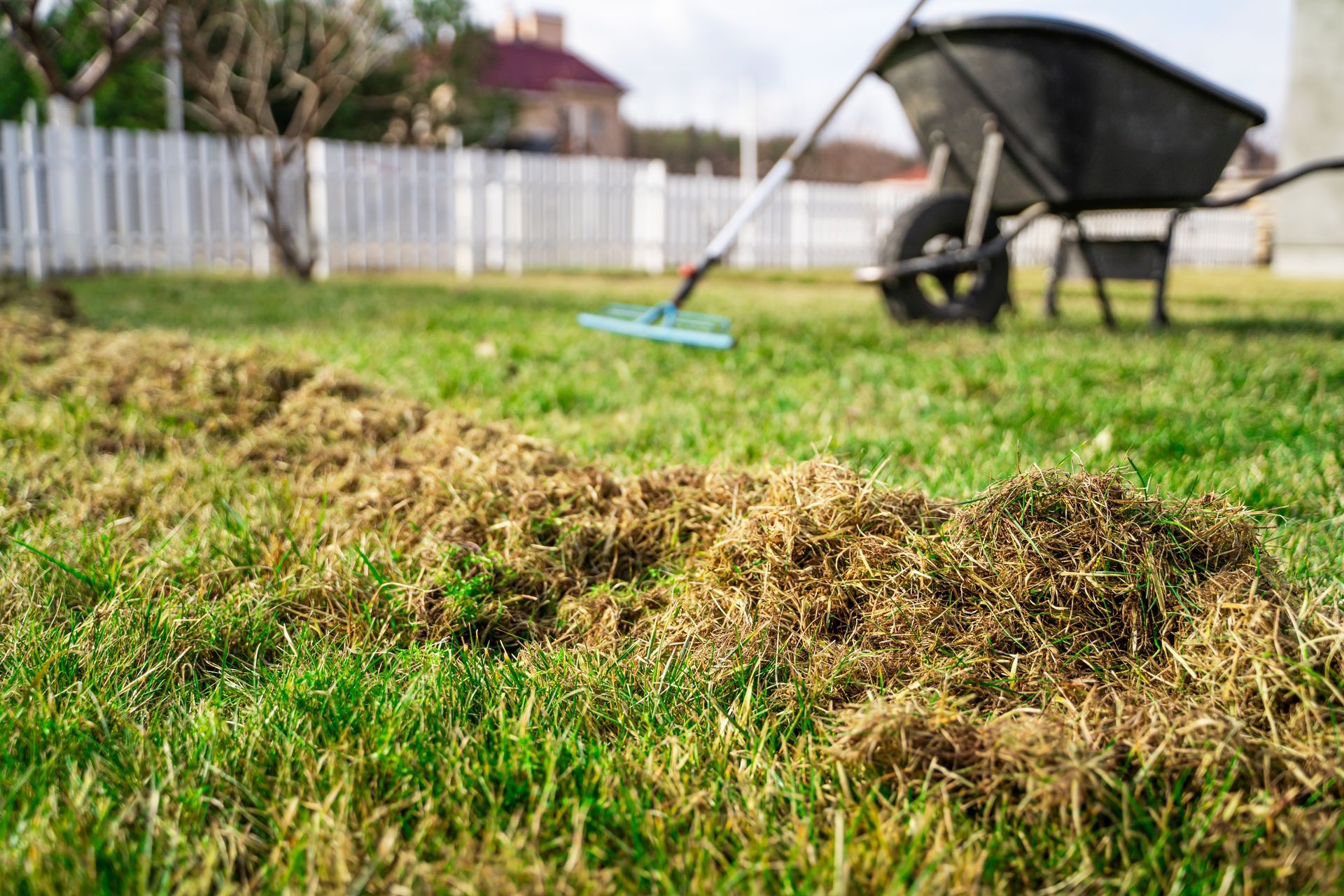
After cores are pulled and seed is distributed, the visible change begins in the soil surface itself: the plugs sitting on the lawn dissolve within a week or two of normal watering and mowing, working back into the turf as a light top-dress. The aeration holes remain open long enough for seed to settle and for the first irrigation cycle to drive moisture directly into the root zone. Grass selection matters at this stage because the wrong cultivar for Charlotte's mix of sun and partial shade will germinate but thin out again within a season.
Within a few weeks of germination, the previously bare or patchy sections begin filling with new growth that matches the surrounding turf's color and texture once it matures. Established turf that was thin rather than absent densifies noticeably, standing more upright and holding color through dry stretches that would have previously left it looking stressed. The overall lawn surface shifts from uneven and patchy to consistent, which becomes most apparent when mowing reveals an even cut height across areas that previously required the deck to be raised to avoid scalping thin spots.
Timing the overseeding correctly relative to soil temperature rather than calendar date makes a measurable difference in germination rate. Cool-season grasses used to overseed warm-season turf in Charlotte require soil to be within a specific temperature window, and seeding too early or too late into that window changes how much seed actually establishes versus sits dormant or fails. Maximum Landscaping & Lawn Care accounts for this sequencing, selecting seed type based on the existing turf and the sun exposure of the specific lawn areas being treated.
Questions About How Aerating and Overseeding Works
These questions address the actual mechanics of aerating and overseeding, including what preparation is needed, how the two steps interact, and what to watch for as the lawn recovers.
What type of aerator produces the best results for compacted turf? Core aerators that extract plugs perform better on compacted clay-based soils than spike aerators, which press the soil further down rather than removing it. For Charlotte lawns over fill-graded clay, a core machine with hollow tines is the correct tool because it physically removes material and creates open channels rather than displacing compaction deeper.
What type of aerator produces the best results for compacted turf? Core aerators that extract plugs perform better on compacted clay-based soils than spike aerators, which press the soil further down rather than removing it. For Charlotte lawns over fill-graded clay, a core machine with hollow tines is the correct tool because it physically removes material and creates open channels rather than displacing compaction deepe
How deep should aeration holes be for overseeding to take hold?
Tine depth typically falls between two and three inches for most residential lawns, which is enough to breach the compaction layer without disturbing irrigation lines or shallow utility runs. Shallower passes in heavily trafficked areas may require a second perpendicular pass to achieve adequate seed-to-soil contact across the full turf surface.
What needs to happen before aeration begins?
The lawn should be mowed shorter than its standard height and irrigated the day before so the soil is moist but not saturated. Dry soil resists core extraction, leaving shallow plugs that don't open channels effectively, while waterlogged soil compacts further under equipment weight.
Why does seed selection matter differently in Charlotte compared to other regions?
Charlotte lawns commonly carry warm-season grasses like Bermuda or Zoysia, and overseeding with a mismatched cool-season variety creates a turf that competes with itself and loses density as temperatures rise. Matching the overseeding cultivar to the existing grass type and the specific light exposure of each lawn zone determines whether new growth integrates or fades.
How long should mowing be delayed after overseeding? New seedlings are typically ready for a first mow once they reach approximately three inches, which allows the root system to anchor before the blade passes over. Mowing too early shears seedlings before they have set roots and removes the new growth that feeds the plant during its first establishment weeks.
New seedlings are typically ready for a first mow once they reach approximately three inches, which allows the root system to anchor before the blade passes over. Mowing too early shears seedlings before they have set roots and removes the new growth that feeds the plant during its first establishment weeks.
Maximum Landscaping & Lawn Care is ready to walk through your lawn's current condition and identify which areas will benefit most from core aeration and overseeding this season. Connect directly to schedule a property walkthrough and get a plan based on your turf type and coverage gaps.
Our landscaping services at a glance
If you’re ready to transform your landscape, make our team your first call for landscaping services. Our services include:
Installing trees
Installing plants
Mowing lawns
Trimming trees
Pruning trees
And much more
We can also help to keep your yard looking its best with our landscape maintenance services. Contact us now to arrange for pruning or mowing services.